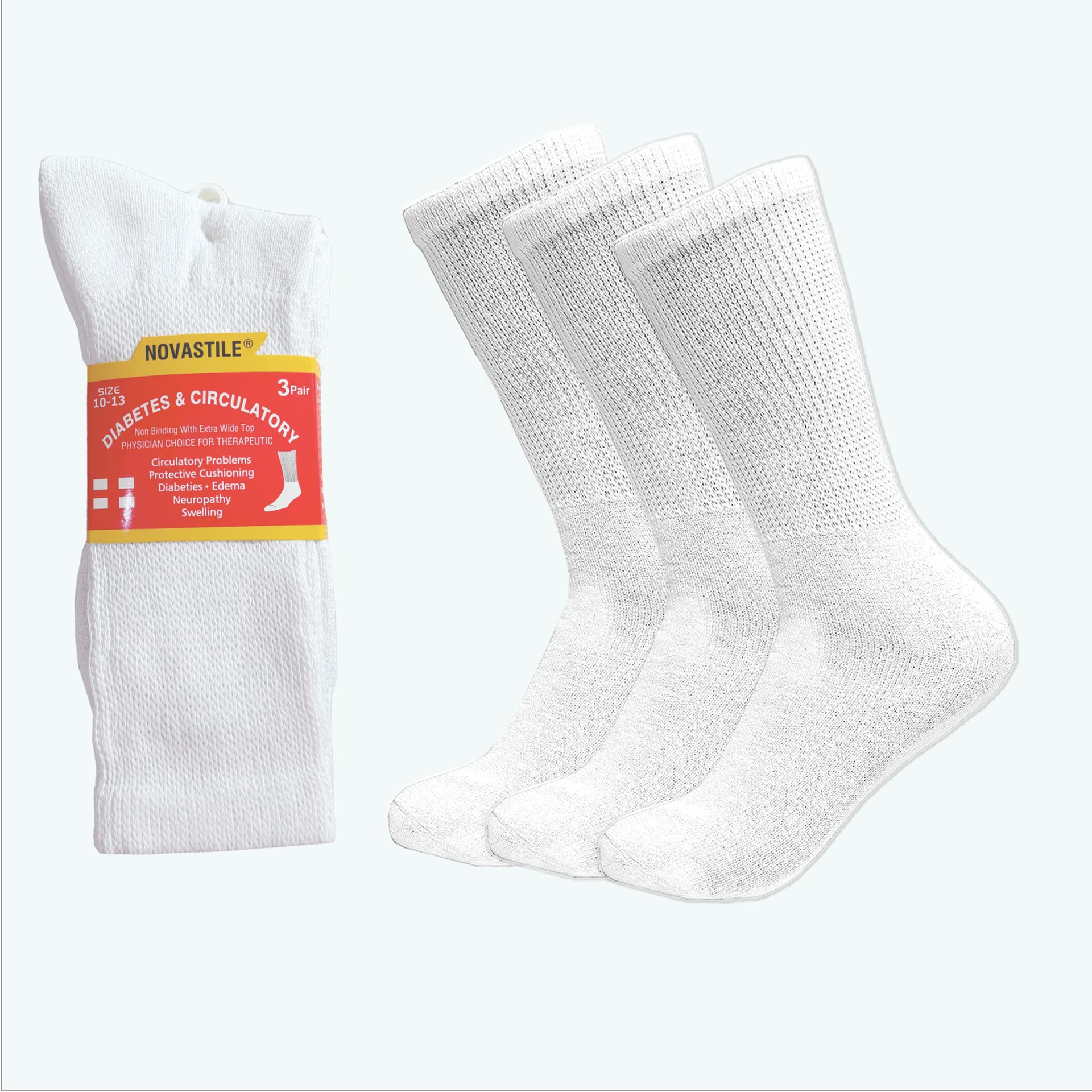
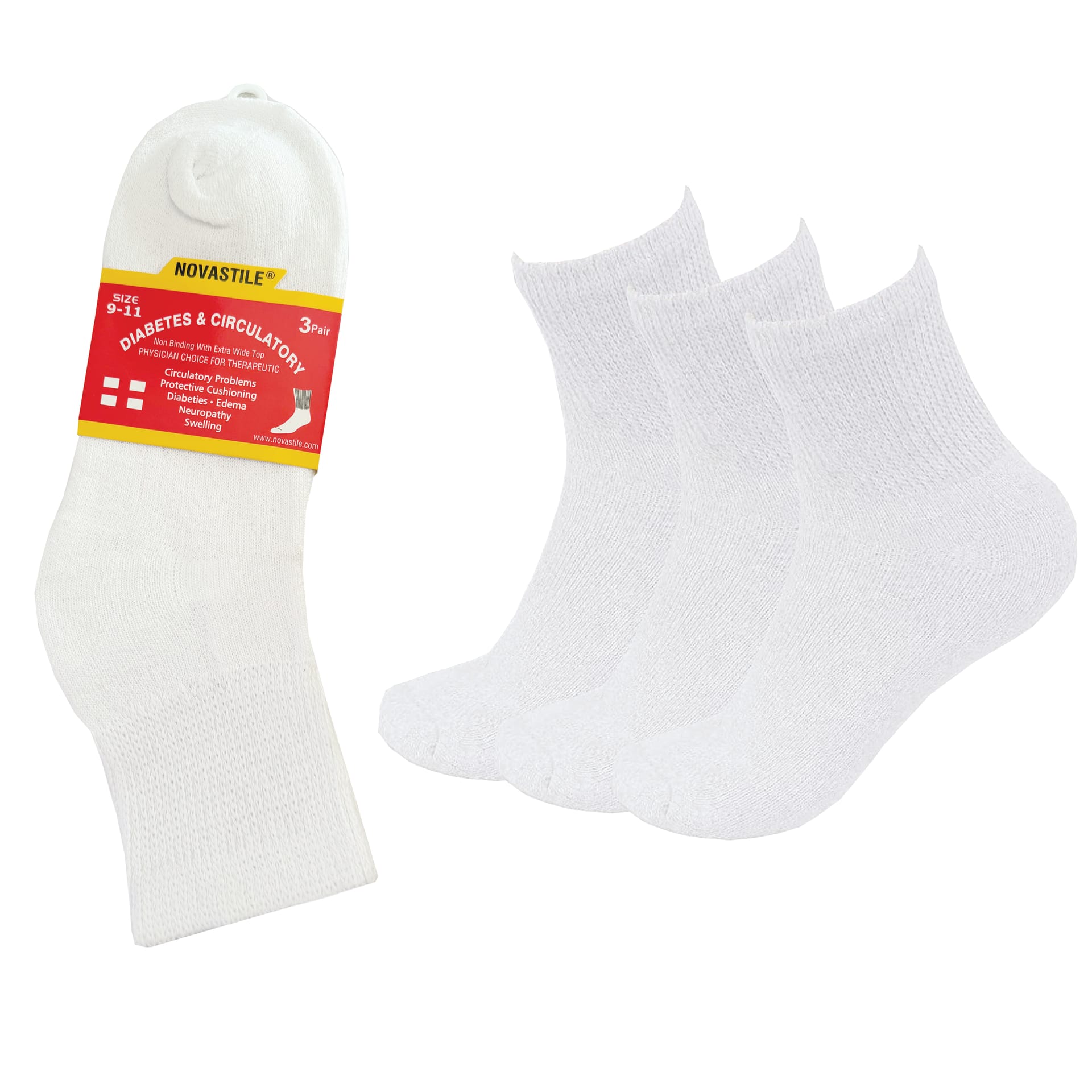
Non-binding diabetic socks are socks engineered with a relaxed elastic top that holds the sock in place without constricting the ankle or lower calf. The name describes exactly what they don't do — bind. For people with diabetes, peripheral arterial disease, or chronic swelling, that distinction matters more than it sounds.
Benefit 1: No Restriction on Blood Flow
The tight elastic band of a standard sock compresses the lower leg. For healthy feet with good circulation, this is a minor inconvenience that leaves temporary sock marks. For feet with reduced arterial or venous circulation — common in diabetes — that compression adds another barrier to already-limited blood flow. Non-binding elastic removes this barrier entirely.
Benefit 2: No Sock Marks
Sock marks — the indentations left on the ankle and lower calf after removing socks — are a physical sign that the elastic was compressing tissue. For people with good skin turgor and circulation, marks disappear within minutes. For people with edema, diabetes, or venous insufficiency, marks can persist for hours and indicate real pressure was being applied. Non-binding socks leave no marks.
Benefit 3: Reduced Friction from Seamless Toes
Non-binding diabetic socks are almost always paired with seamless toe construction. Regular sock toe seams sit across the toe joints — a friction point that causes blisters and calluses in normal feet, and potentially serious wounds in feet with reduced sensation (neuropathy). When you can't feel a blister forming, it progresses undetected. Seamless toes eliminate the friction source completely.
Benefit 4: Cushioned Protection at High-Risk Pressure Points
Extra cushioning in the heel and ball of the foot absorbs impact that would otherwise concentrate directly on skin and bone. For feet with reduced fat padding (common with aging and diabetes), this cushioning replaces lost natural protection. It reduces the daily microtrauma that accumulates into skin breakdown over time.
Benefit 5: Moisture Management
NOVASTILE diabetic socks use moisture-wicking cotton blends that pull sweat away from the skin surface. Damp skin is significantly more vulnerable to friction damage and fungal infections. Keeping feet dry throughout the day is a simple preventive measure with real impact on foot health.
Who Benefits Most
- People with Type 1 or Type 2 diabetes
- Anyone with diabetic peripheral neuropathy
- People managing edema or chronically swollen feet
- Those with poor circulation in the lower legs
- Anyone who stands for extended periods daily
- People with sensitive skin or a history of pressure sores