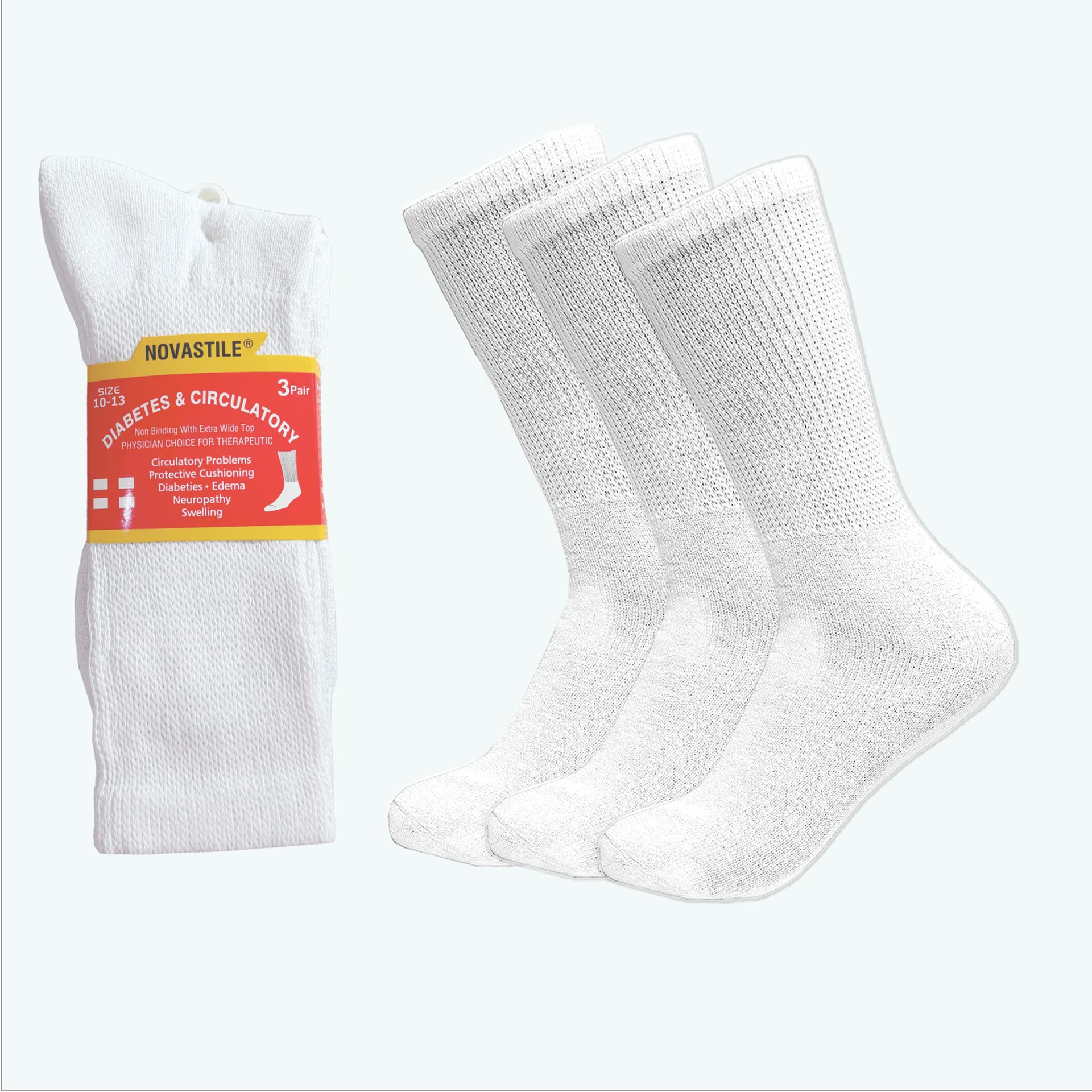
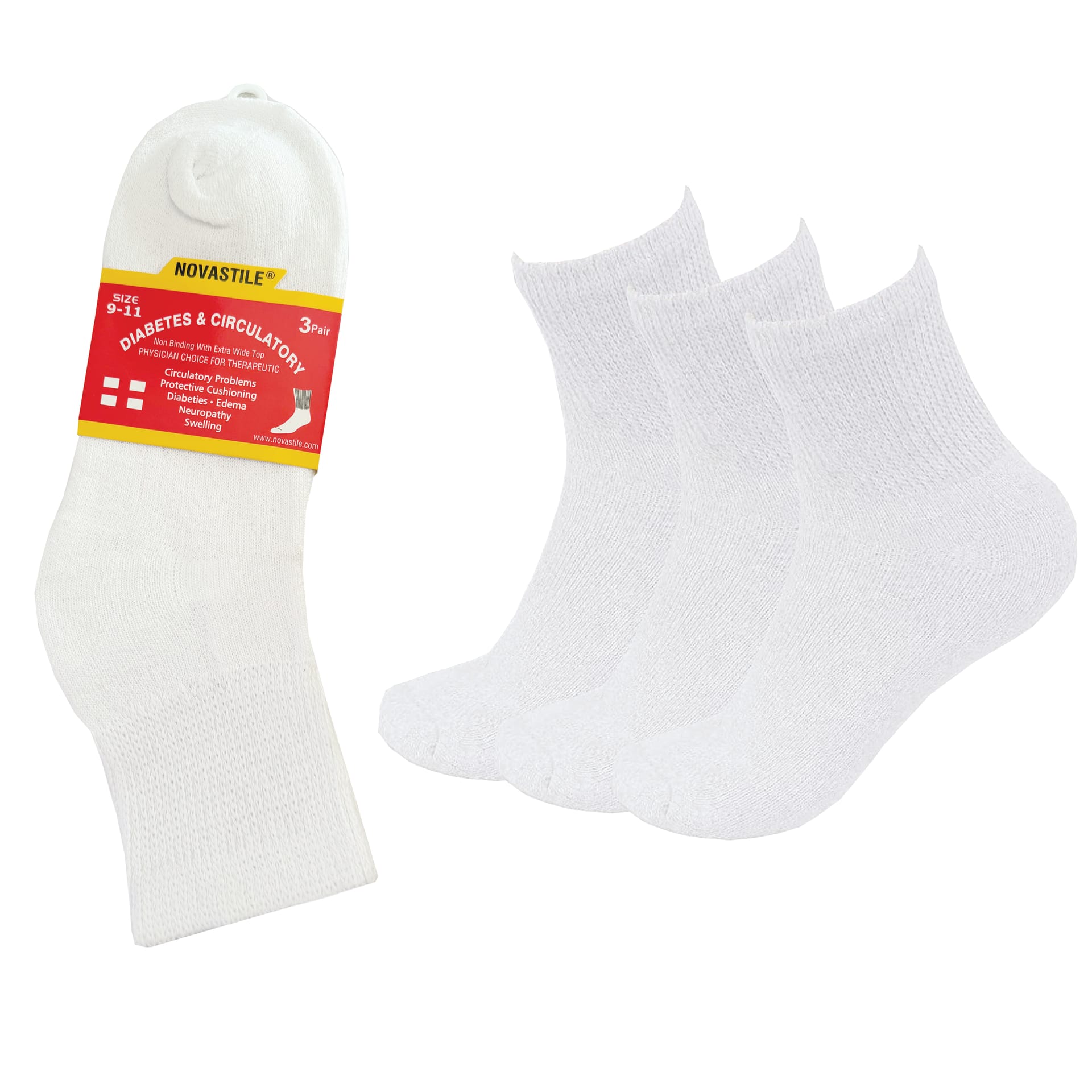
Diabetic socks and compression socks are often confused — they're both specialty socks marketed toward people with circulation and foot concerns. But they work in opposite ways and serve different purposes. Using the wrong one can actually make your condition worse.
The Core Difference: Pressure
Diabetic socks are non-binding — they're engineered to apply as little pressure as possible to the ankle and calf. The goal is to avoid restricting blood flow. Compression socks apply graduated pressure — tightest at the ankle, gradually releasing up the calf — specifically to push blood upward and improve venous return. One removes pressure; the other adds it deliberately.
When You Need Diabetic Socks
Diabetic socks are designed for people with diabetes-related foot complications: reduced circulation, neuropathy (reduced sensation), swollen feet, or high risk of ulcers. The non-binding top avoids constricting already-compromised blood flow. The seamless toe eliminates friction that might cause a sore that goes unnoticed due to neuropathy. Extra cushioning protects pressure points.
- Type 1 or Type 2 diabetes with foot sensitivity
- Diabetic neuropathy — reduced foot sensation
- Swollen ankles and feet (edema) where pressure worsens discomfort
- History of foot ulcers or slow-healing wounds
- Anyone who needs a non-restrictive everyday sock
When You Need Compression Socks
Compression socks are prescribed for people with venous insufficiency, deep vein thrombosis (DVT) risk, varicose veins, or leg swelling caused by prolonged sitting or standing. The applied pressure assists blood flow upward against gravity. They're also popular for long flights and athletic recovery.
- Venous insufficiency and varicose veins
- DVT prevention during long flights or bed rest
- Post-surgical recovery (as directed by a doctor)
- Athletic recovery and performance
- Leg swelling from extended sitting or standing (non-diabetic)
Can People with Diabetes Wear Compression Socks?
Sometimes — but only when specifically prescribed by a doctor. For most people with diabetes, especially those with neuropathy or arterial disease, compression socks can restrict blood flow further and increase the risk of pressure wounds. The decision requires a medical evaluation. Never self-prescribe compression socks if you have diabetes.
NOVASTILE Diabetic Socks: What They Do
NOVASTILE diabetic socks are non-binding — relaxed elastic top, seamless toe, extra cushioning. They're designed to protect feet without applying any therapeutic pressure. Available in crew and ankle lengths in packs of 3, 6, or 12.