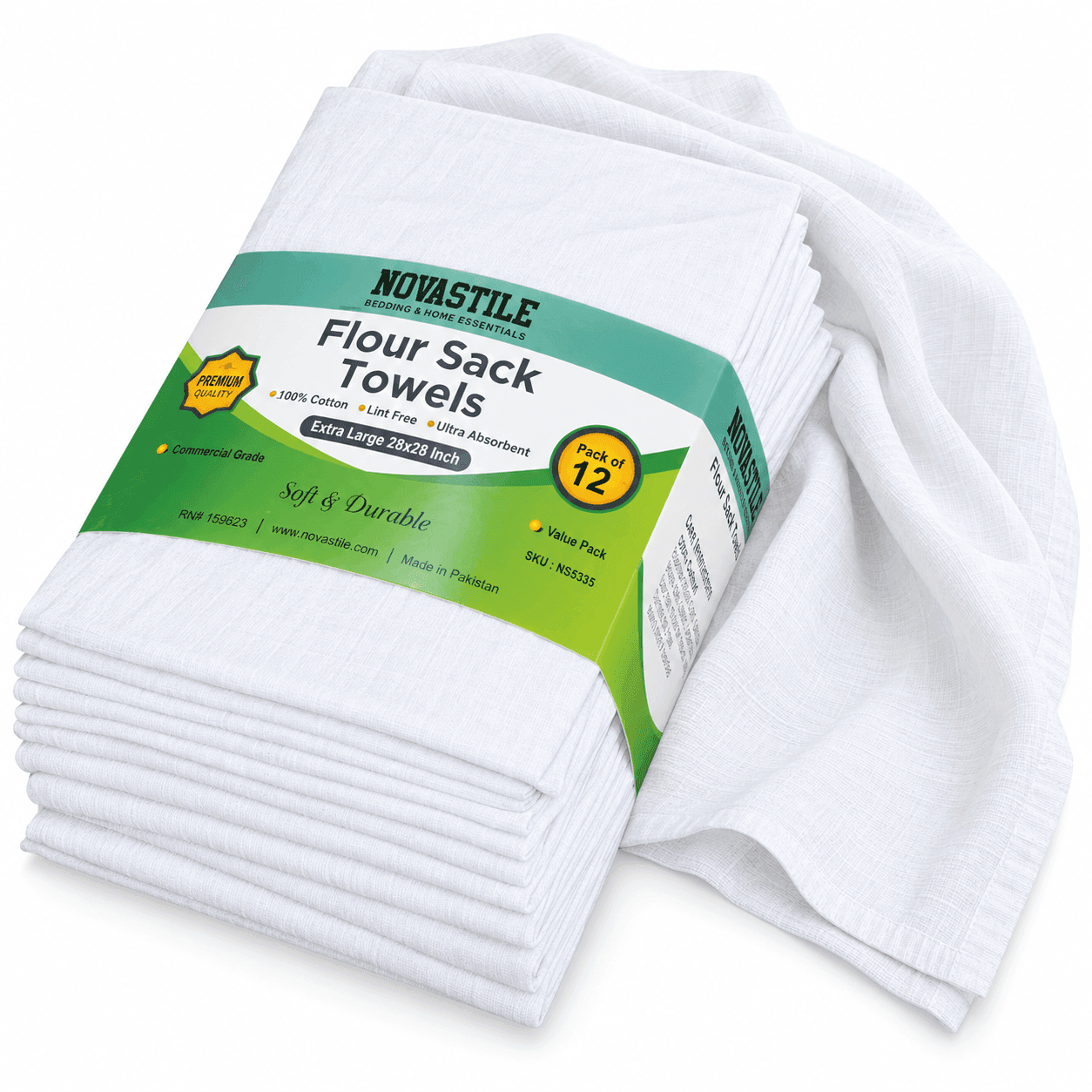
Yes — flour sack towels are excellent for drying dishes. Their flat, lint-free cotton weave dries and polishes glassware to a streak-free finish and keeps working across a whole sink of dishes because it dries fast between uses instead of staying soggy.
Flour sack towels and standard dish towels look like they do the same job, but the weave changes everything about how they perform. Understanding the difference means you'll always grab the right cloth for the task instead of fighting lint on your wine glasses or waiting for a soaked towel to dry.
| Towel type | Absorbency | Lint | Drying time | Best use |
|---|---|---|---|---|
| Flour sack | Steady, holds up across many dishes | Lint-free | Dries fast between uses | Drying & polishing glassware, baking, straining |
| Terry | High in a single burst (looped pile) | Sheds lint | Slow — stays damp | Mopping big spills, drying hands |
| Waffle | Moderate, textured grid | Low to moderate lint | Moderate | General wiping with a bit of grip |
New to these towels? Start with our guide to what a flour sack towel is, then read on for how they compare with terry and waffle dish towels. Wondering about the terminology too? See our breakdown of tea towel vs flour sack towel.
Are flour sack towels good for drying dishes?
Yes — flour sack towels are one of the best cloths for drying dishes. Their flat, lint-free 100% cotton weave dries and polishes glassware to a streak-free finish without leaving fibers behind, and because the thin weave dries fast between uses it keeps working across a whole sink of dishes instead of turning into a soggy, smelly towel. The NOVASTILE flour sack towels collection offers 28×28 inch towels in packs sized for everyday drying.
The Weave: Flat vs. Looped
Flour sack towels use a flat, plain weave — smooth, thin, and lint-free. Regular dish towels are usually terry (looped pile, like a bath towel) or waffle weave (a textured grid). Terry towels hold more water at once because of the loops, but those same loops shed lint, trap grease, and take a long time to dry. The flat flour sack weave releases lint-free and dries quickly between uses.
Absorbency and Drying Speed
Terry towels feel more absorbent in the moment because the pile soaks up a burst of water. But flour sack towels absorb steadily and — crucially — dry fast, so they don't stay damp and start to smell. For drying dishes one after another, a flour sack towel keeps working; a saturated terry towel just smears water around.
Lint: The Deciding Factor for Many Tasks
This is where flour sack towels win outright. Polishing glassware, wiping camera lenses or eyeglasses, drying stainless steel, straining liquids, or wrapping bread all demand a lint-free cloth. Terry towels leave fibers behind on every one of those jobs. If lint matters, the flour sack towel is the correct choice every time.
When a Regular Dish Towel Is Fine
Terry and waffle towels earn their place for heavy, thick jobs: mopping up a big spill, drying hands, or scrubbing with a bit of grip. If you're wiping a large volume of water in one pass and lint isn't a concern, a terry towel handles it well. Most kitchens are best served by keeping both — flour sack towels for precision work and terry towels for heavy soak-up.
The Practical Setup
For most kitchens, a stack of flour sack towels does 80% of the daily work. Start with a 12 or 24 pack of NOVASTILE flour sack towels for lint-free drying, baking, and polishing, and keep a few terry towels around for heavy spills. You can compare the 12, 24, and 192 pack options on the flour sack towels product page.
Sources & References
Cotton Incorporated · FTC: Textile and Wool Act labeling requirements