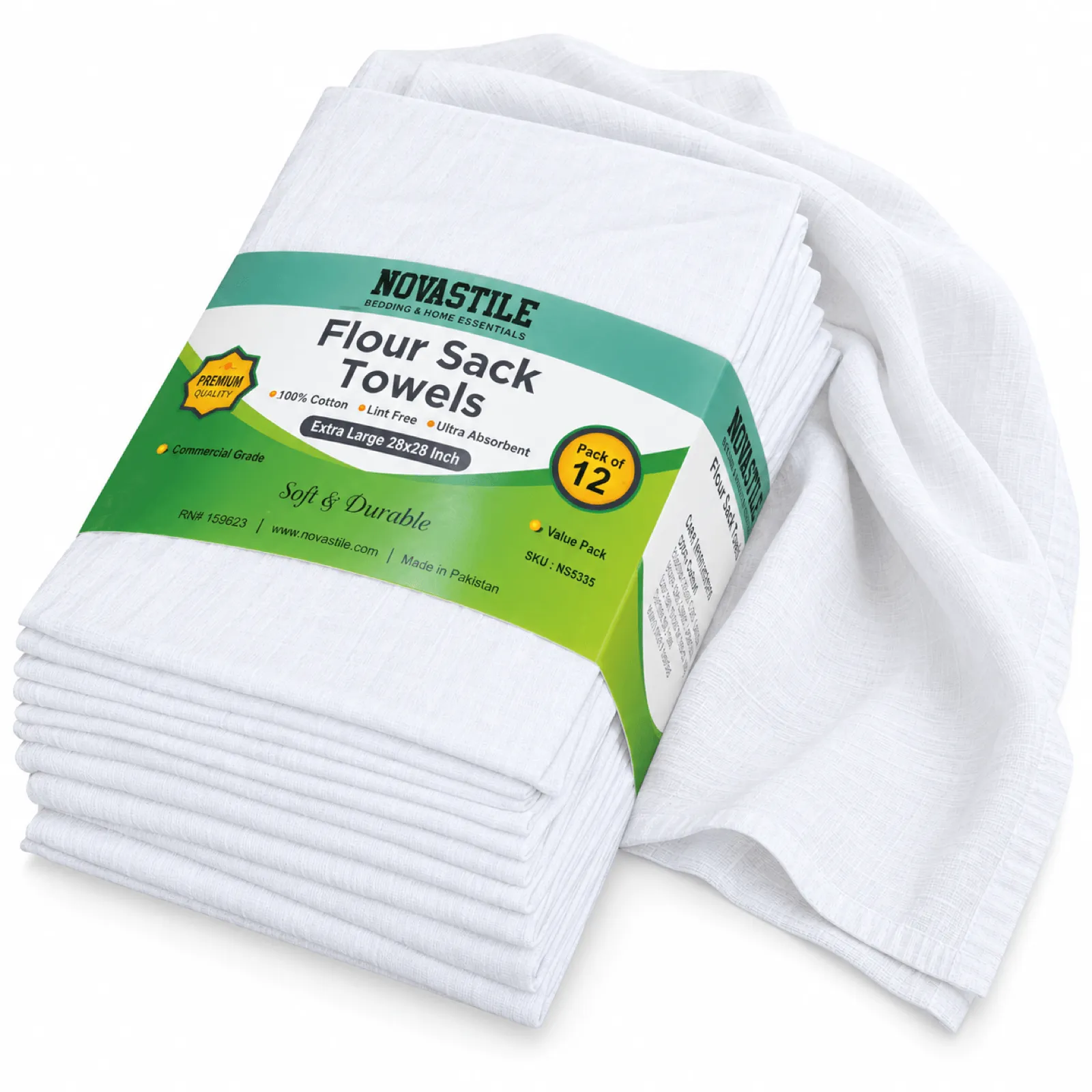
Flour sack towels are used for drying dishes and glassware, covering rising dough, straining stock and nut milk, wrapping bread, cleaning without lint and replacing paper towels around the house. They're good at all of it for the same three reasons: they're large (usually about 28 × 28 inches), thin enough to dry fast, and woven flat so they don't shed fibers.
Stocking up? Browse all our flour sack dish towels: the same 28×28 in, 100% cotton towel in 12, 24 and 192 packs.
Every use below works with our 28×28 flour sack towels — 100% ring spun cotton with hemmed edges, sold in 12, 24 and 192 packs.
Drying and kitchen cleanup
- Drying dishes — one towel handles a full rack because it's so large and dries quickly between uses
- Polishing wine glasses and stemware without streaks or lint
- Buffing stainless steel appliances and sinks to remove water spots
- Drying washed salad greens and herbs — roll them up in a towel instead of using a spinner
- Lining a dish rack or counter as a drying mat
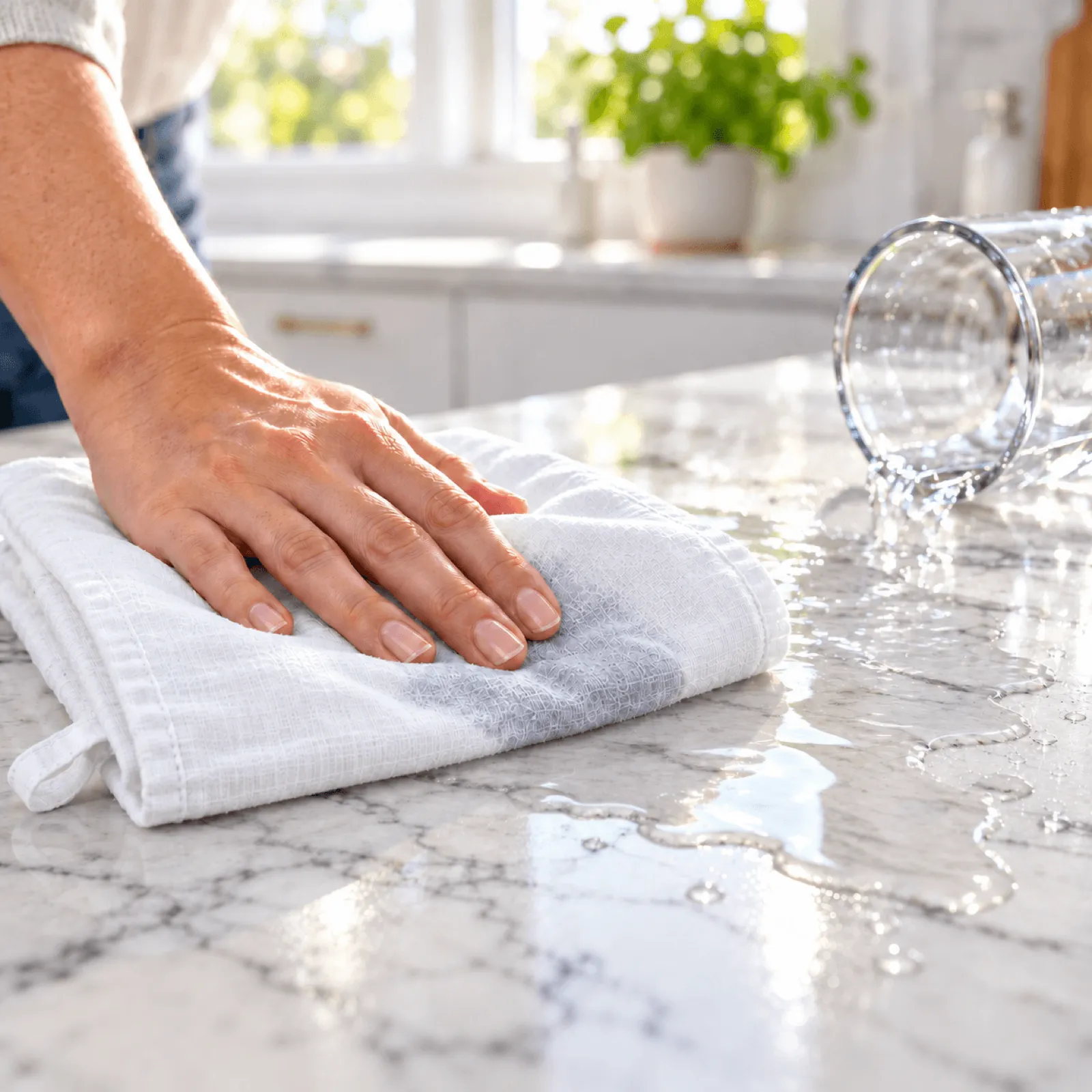
- Wiping counters and spills as a reusable swap for paper towels

Baking and bread
- Covering bowls of rising dough to keep the surface from drying out
- Lining a proofing basket — dust the towel with flour so the dough releases cleanly
- Wrapping cooled loaves to keep the crust crisp longer than a plastic bag
- Rolling a sheet cake or jelly roll while it's warm so it cools without cracking
- Lining a bread basket to keep rolls warm at the table
For step-by-step proofing and bread tips, read how to use flour sack towels for baking.
Cooking and food prep
- Straining stock, broth or jam — the tighter weave catches finer bits than loose cheesecloth
- Making nut milk, cold brew coffee or yogurt cheese
- Squeezing water out of grated potatoes, zucchini or spinach
- Keeping tortillas or flatbreads warm and soft
- Covering a steamer basket so dumplings and buns don't stick
- Wrapping fresh herbs loosely before refrigerating them
For food uses, wash new towels before the first use, and keep a few dedicated to straining so they don't pick up detergent residue or stains from cleaning jobs.
Cleaning around the house
- Cleaning mirrors, windows and glass tabletops without lint
- Dusting furniture and electronics — use slightly damp for dust, dry for screens
- Using as a bar mop for bars, cafes and busy kitchens
- Drying the car after washing, especially glass and chrome
Home, gifts and crafts
- Cloth napkins for everyday meals or picnics
- Reusable gift wrap — tie the corners around a jar or a loaf of bread
- Blanks for embroidery, stamping, fabric paint or iron-on designs
- Picnic or lunch wrap for sandwiches and snacks
Which uses need which towel?
| Job | Why a flour sack towel works | Tip |
|---|---|---|
| Glass and stainless | Flat weave leaves no lint | Use dry; skip fabric softener, which causes streaks |
| Straining | Tight weave catches fine solids | Wet and wring the towel first so it doesn't soak up liquid |
| Bread and dough | Breathable cotton, large enough to cover a bowl | Dust with flour so dough doesn't stick |
| Spills and cleanup | Absorbent and fast-drying | Rinse and hang to dry between uses |
| Crafts and printing | Smooth, plain cotton surface | Pre-wash and iron flat before decorating |
How many flour sack towels do you need?
A 12-pack covers drying and everyday cleanup for most households. A 24-pack lets you keep separate sets for food, cleaning and baking. The 192-pack is sized for restaurants, bakeries and cafes; see bulk flour sack towels for commercial orders.
Keep them working by skipping fabric softener and dryer sheets — our guide to washing flour sack towels has the full routine. New to them? Start with what are flour sack towels, or see how they differ from other tea towels in tea towel vs flour sack towel.
Ready to stock up? See our 100% cotton flour sack towels (28×28), sold in 12, 24 and 192 packs.
Sources & References
American Cleaning Institute: Laundry tips · U.S. EPA: Reduce, reuse, recycle