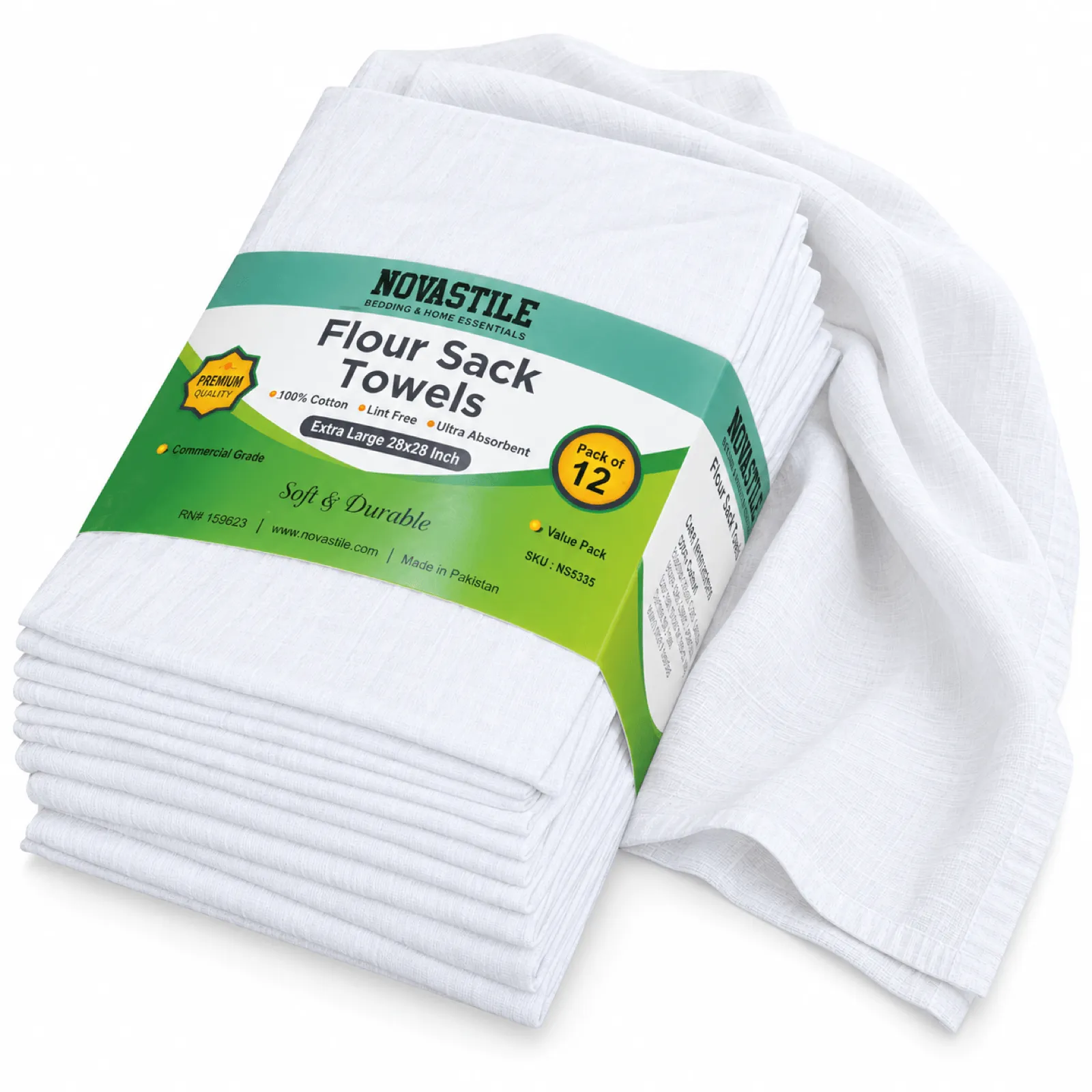
The best flour sack towels are 100% cotton with a flat, tight weave that does not leave lint, a generous size around 28×28 inches, and neatly hemmed edges. Blends and thin weaves leave fibers on glassware and wear out faster.
Stocking up? Browse all our flour sack dish towels: the same 28×28 in, 100% cotton towel in 12, 24 and 192 packs.
Our 100% cotton flour sack towels are 28×28 inches, lint-free and hemmed, in 12 and 24 packs for home kitchens and a 192-pack for bulk use.
1. Material: 100% cotton
Cotton absorbs water and gets softer and more absorbent with each wash. Polyester blends repel water and smear glass instead of drying it. Check the label for 100% cotton.
2. Weave: flat and lint-free
A flour sack towel should have a smooth, flat weave with no loops. That is what makes it lint-free on glasses and safe for straining, proofing dough and covering bread.
That flat weave is also what separates a flour sack towel from other tea towels — see tea towel vs flour sack towel.
3. Size: around 28×28 inches
A large square towel covers a full bowl of dough, wraps a loaf, lines a proofing basket and dries a whole rack of dishes. Smaller towels run out of dry surface quickly.
4. Edges: hemmed all around
Hemmed edges keep the towel from fraying in the wash. Look closely at photos — loose, unfinished edges are a sign the towels will not last.
5. Pack size: match how you use them
| Pack | Best for |
|---|---|
| 12 pack | Smaller homes, one kitchen |
| 24 pack | Busy households, bakers, weekly laundry |
| 192 pack | Restaurants, bakeries, bars, crafts and printing |
Are flour sack towels good for baking?
Yes — they are one of the best tools for it. Use them to cover rising dough, line a proofing basket, wrap bread and strain stocks. See our guide on how to use flour sack towels for baking for step-by-step uses.
Sources & References
Cotton Incorporated · CDC: Food Safety · FoodSafety.gov: 4 steps to food safety