Down alternative and natural latex sit at opposite ends of the topper market. One is a soft, fluffy fiber. The other is a dense, springy foam. Both are good materials, and the better fit depends on how you like a bed to feel. We sell down alternative toppers, such as our 550 GSM and 1000 GSM queen models, so we know that side of the comparison best. This guide stays neutral and describes both materials in general terms.
What is a down alternative mattress topper?
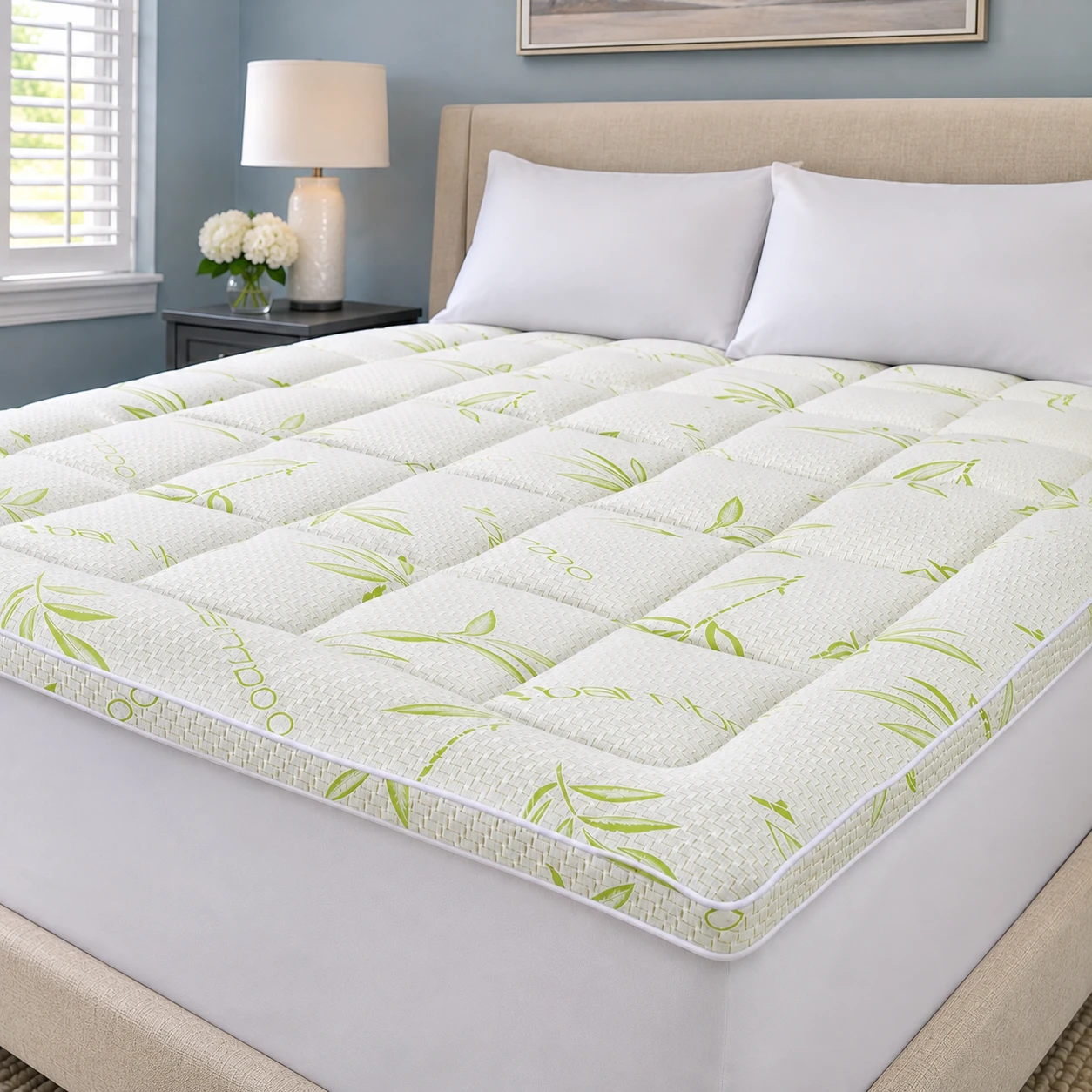
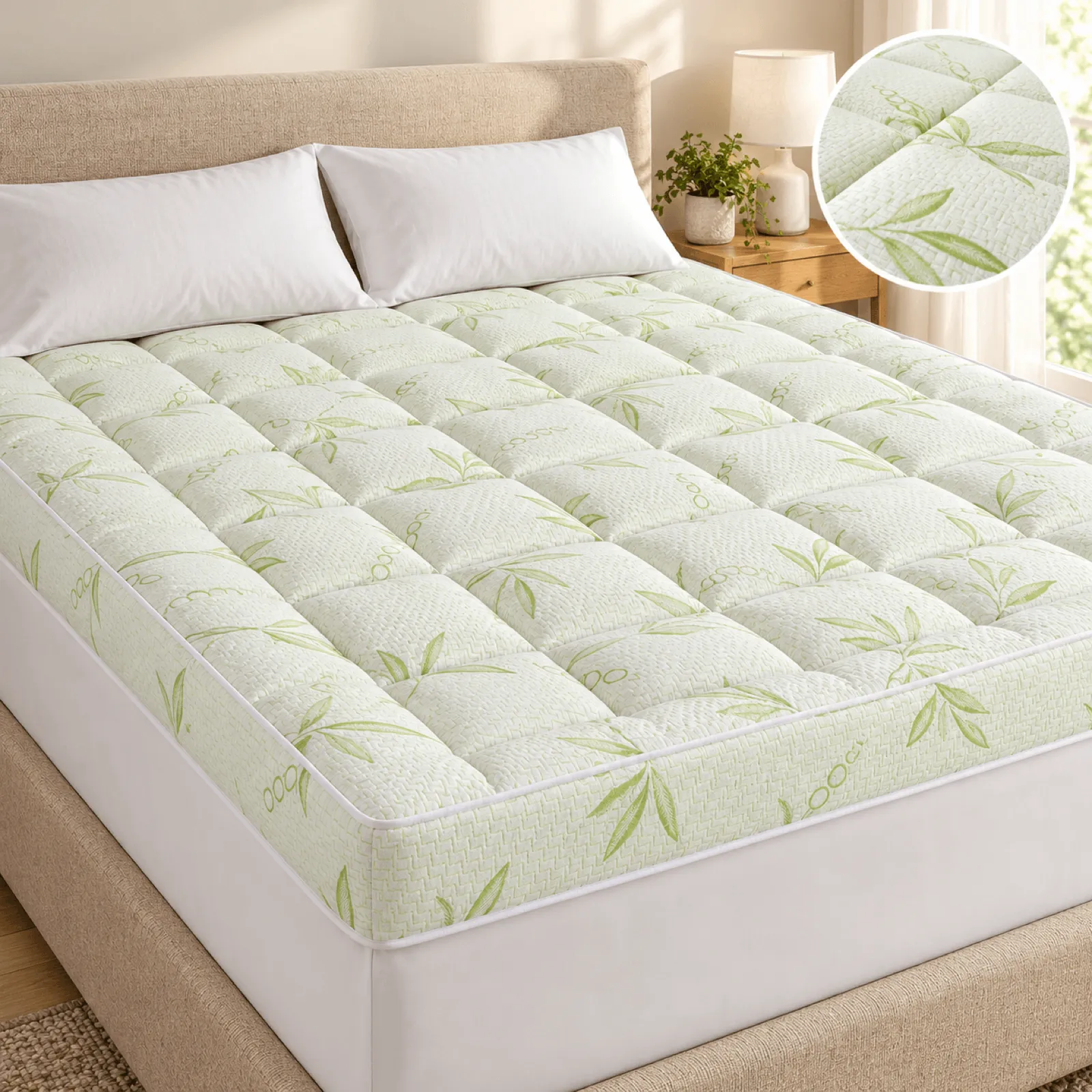
A down alternative topper is filled with polyester fiber designed to mimic the softness of down. The fibers are fine and fluffy, and the topper is usually quilted so the fill stays evenly spread. Fill weight is measured in GSM, grams per square meter.
The feel is soft and lofty, often described as a pillow top. You sit in the fill and it compresses under weight, then recovers when you get up. Shaking the topper out helps bring the loft back.
What is a natural latex mattress topper?
Natural latex comes from the sap of rubber trees and is shaped into foam layers. Manufacturers generally describe two processes, Dunlop and Talalay, which produce slightly different densities and textures. A latex topper is usually a solid slab a couple of inches thick, and it feels springy: it pushes back when you press into it and returns to shape quickly.
Products sold as natural latex vary. Some blend natural and synthetic latex, and certification claims differ by maker, so read the label and the manufacturer's own description rather than assuming.
How do they compare side by side?
| Down alternative fiber | Natural latex | |
|---|---|---|
| Feel | Soft, fluffy, pillow top | Springy, dense, responsive |
| Sinking in | Sinks in gradually, more with higher GSM | Cushions with push-back, tends to feel more buoyant |
| Weight | Light for its thickness | Heavy, especially in queen |
| Cleaning | Often machine washable (check the label) | Usually spot clean, not machine washed |
| Maintenance | Shake out to restore loft | Occasional rotation, keep out of strong sunlight |
| Temperature | Depends on fill weight and cover | Depends on construction, some have ventilation holes |
| Animal-derived fill | None | None |
| Setup | Elastic skirt fits over the mattress | Often a slab with or without a cover and straps |
Which one feels better?
It comes down to preference. If you like to sink into a soft, hotel-style bed, fiber fill delivers that. If you like a bed that holds you up and pushes back gently, latex is closer to that. Neither is better in the abstract. People who want plush tend to pick fiber. People who want bounce tend to pick latex.
Which one sleeps cooler?
Temperature depends on the full construction, not only the material. A thick fiber topper with a breathable cover, such as the bamboo viscose surface on ours, traps less heat than a heavy quilted one, and a lighter fill sleeps cooler than a heavier one. Latex is open-cell, and some latex toppers add ventilation holes to improve airflow. A dense latex slab can still feel warm to some sleepers.
If you are shopping mainly on temperature, read our cooling mattress topper guide and browse the cooling mattress toppers page.
Which one is easier to live with?
Weight and washing are the big practical gaps. A queen latex topper is heavy, so moving it, putting it on and rotating it takes effort, and it generally is not machine washed. A queen down alternative topper is much lighter to handle. Ours can go into the washing machine on a gentle cycle at 30 degrees Celsius or cooler, with no bleach and no heat in the dryer.
Fiber needs more attention to loft. Shaking the topper for a few minutes every so often, and giving it 24 to 48 hours after washing, keeps it full. Latex keeps its shape without shaking but can take a surface mark if exposed to moisture or heat, so follow the maker's instructions.
Which one lasts longer?
Lifespan depends on weight, use and quality, and we do not have a number for either material that we can source, so be cautious with any specific year count from a seller. What can be said in general is that fiber loses loft gradually in the spots you sleep on, which is why shaking and rotating matters, and latex tends to hold its shape but can crumble with age or abuse. Look for the manufacturer's warranty terms and read what they actually cover.
Which one suits different sleepers?
| If you | Consider |
|---|---|
| Want a soft, plush, sink-in surface | Down alternative, higher GSM |
| Want a bouncy, supportive surface | Natural latex |
| Want to wash it at home | Down alternative |
| Move the topper often or travel with it | Down alternative, which is lighter |
| Are a side sleeper on a firm mattress | Either, depending on whether you prefer plush or springy |
| Sleep warm | Lighter fiber fill or a ventilated latex slab |
| Want a thick topper with a snug skirt | Down alternative with a deep-pocket skirt |
For side sleepers specifically, we wrote best queen mattress topper for side sleepers, and the side sleeper toppers page lists options. If your main problem is a firm bed, see firm mattress toppers and our guide to a mattress topper for a firm mattress.
What do the NOVASTILE down alternative toppers look like?
We make two queen options: a 550 GSM medium plush topper and a 1000 GSM ultra plush topper. Both are 60 by 80 inches, use a bamboo viscose and polyester cover over down alternative fill, and have an elastic deep-pocket skirt. The 550 GSM fits mattresses 8 to 20 inches deep and the 1000 GSM fits up to 21 inches.
Our broader down alternative mattress topper guide explains GSM in detail, and the comparison of bamboo, memory foam and down alternative toppers adds memory foam to the picture. You can also browse all mattress toppers or just the queen mattress toppers.
What about thickness?
Thickness is stated differently for each material. Latex toppers are usually sold by slab height in inches, with a couple of inches being common. Fiber-filled toppers are described by fill weight, because the loft changes as the fiber compresses and recovers. That makes it hard to compare the two on a single number, and a bigger number in one system does not translate directly to the other. Compare the way each one feels in your own bed, not the figures on a listing.
A practical approach is to decide first how much you want to sink in. If you want to rest on top of the bed with a springy surface, a slab of latex suits that. If you want a layer that you sink into, a higher-GSM fiber topper suits that. Our 550 GSM topper stays closer to the surface, and the 1000 GSM topper is the deeper option.
Who should skip each material?
- Skip a fiber-filled pillow top if you want a firm, springy surface that holds its shape without any shaking.
- Skip natural latex if you want to wash the topper at home or you do not want to lift a heavy slab onto the bed.
- Skip a thick fiber topper if your mattress is already very deep and your sheets have shallow pockets. Check the depth range first.
- Skip a dense latex slab if you sleep warm and the model has no ventilation. Read the construction details.
What should you ask any seller before buying?
- What is the topper made of, layer by layer, and what is the percentage of natural material if it is called natural?
- What mattress depth does it fit?
- How do I clean it, and can I put it in a washing machine?
- What does the warranty or return policy cover, and for how long?
- Is the size the exact one I need? Queen is 60 by 80 inches.
Those five questions work for fiber, foam and latex. A seller who answers them clearly is usually easier to deal with after the sale as well.
How do I decide?
Ask three questions. Do you want soft or springy? Do you want to wash it at home? How much weight are you willing to lift? If you answered soft, yes and not much, down alternative fits. If you answered springy, no and I do not mind, natural latex fits. Both are legitimate choices, and a topper you like the feel of is the one you will keep using.